
Elementary
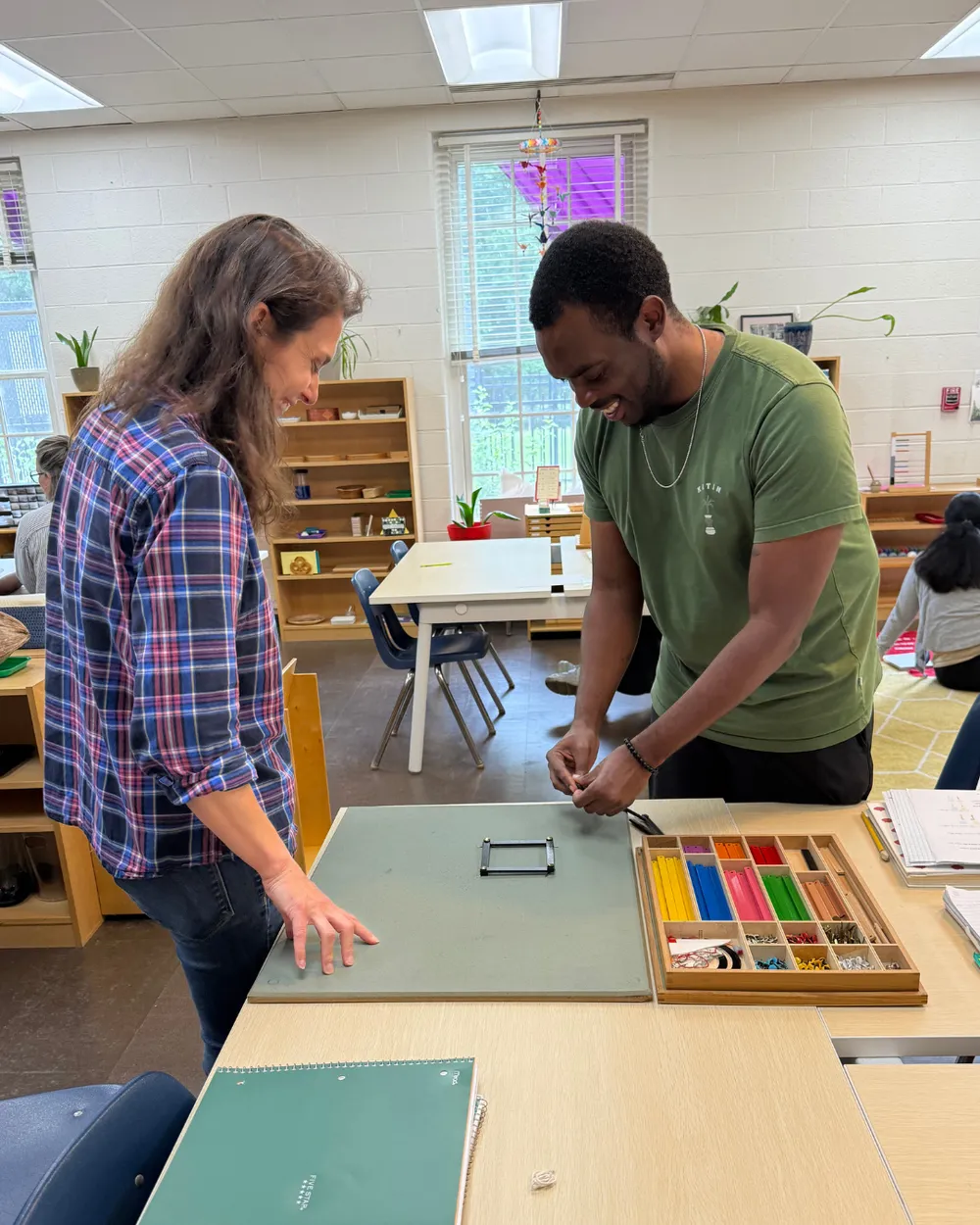
Dr. Montessori created a developmental approach that honors the way the elementary child naturally learns — curious minds supported with hands-on materials that foster abstraction and imagination. Studies are integrated across disciplines and augmented by the children themselves, who organize “going out” into the real world.
The Elementary diploma covers Montessori child psychology and a broad-ranging integrated curriculum. Students engage in classroom-based training (in-person and online) including lectures and supervised practice, reading seminars, observation, and practice teaching.
Observation: 90 hours. Practice teaching: 120 hours.
WMI holds MACTE accredited status for its Elementary teacher education courses through 2031.
Learning aims
- Acquire comprehensive knowledge of Montessori instructional methods and materials appropriate to specific age groups.
- Articulate the relationship of learning at a specific age group to the broader continuum of human development.
- Apply knowledge of the liberal arts to the design of integrated, interdisciplinary curricula.
- Develop the academic, professional, and personal skills to independently direct a Montessori classroom.
- Practice facilitation skills to elicit independent activity and exploration.
- Demonstrate consideration and respect for each child as an intellectual, physical, emotional, social, and spiritual being.
- Develop community-building skills based upon a fundamental respect for children and adults.
- Advocate for the rights of all children.
Components of the course
Montessori child psychology
Lectures and discussions on philosophy and child development. Students write theory essays, supplemented by directed readings of Dr. Montessori’s books.
Integrated curriculum
Students are presented with lessons and materials the way a child would experience them, covering each subject area incrementally.
Albums
Students create nine albums, or teaching manuals: Theory, Mathematics (2), Language, Geometry, Geography, Biology, History, Music, and Art — including essays written from course assignments.
Hands-on practice, observation, material making
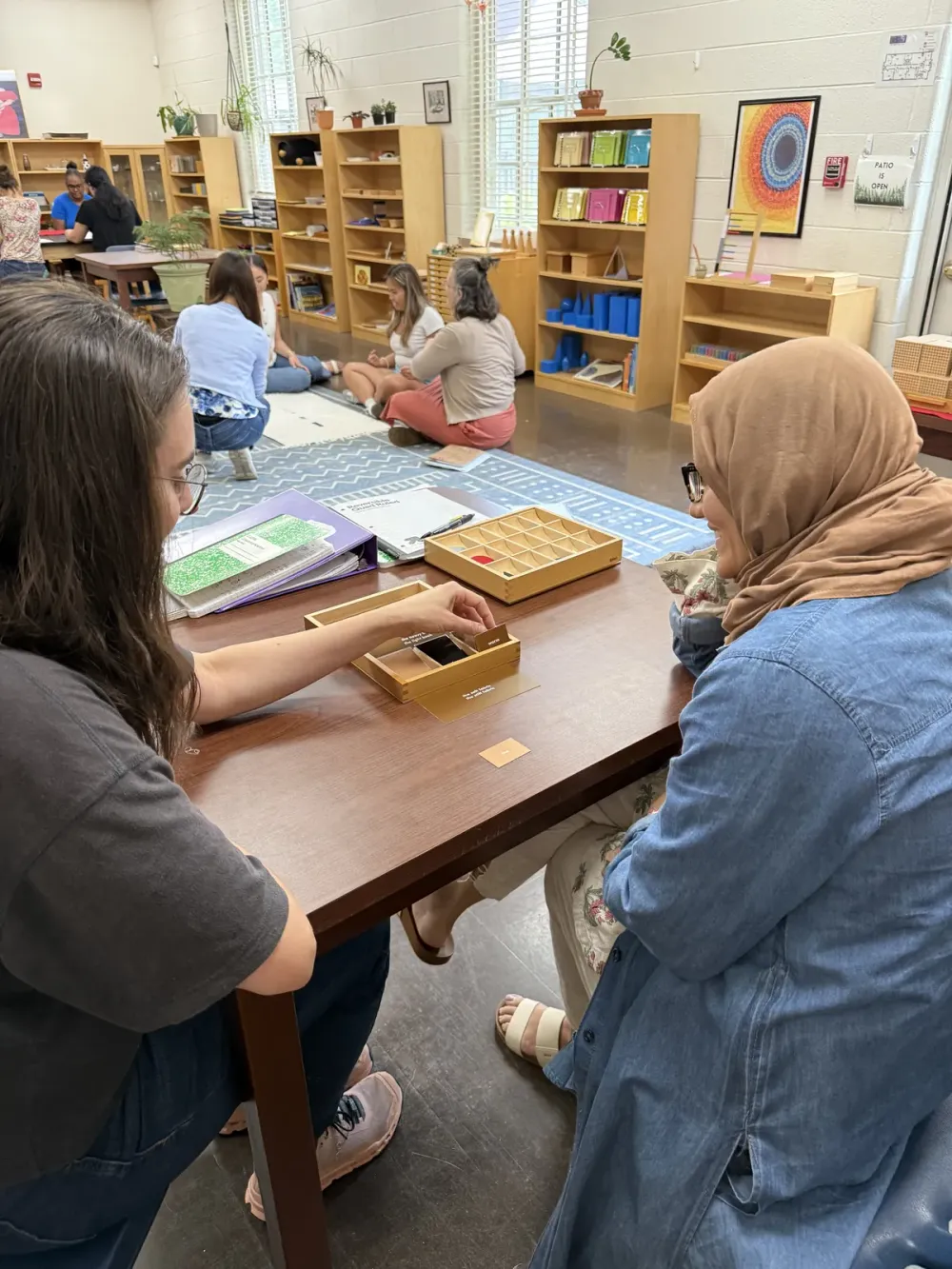
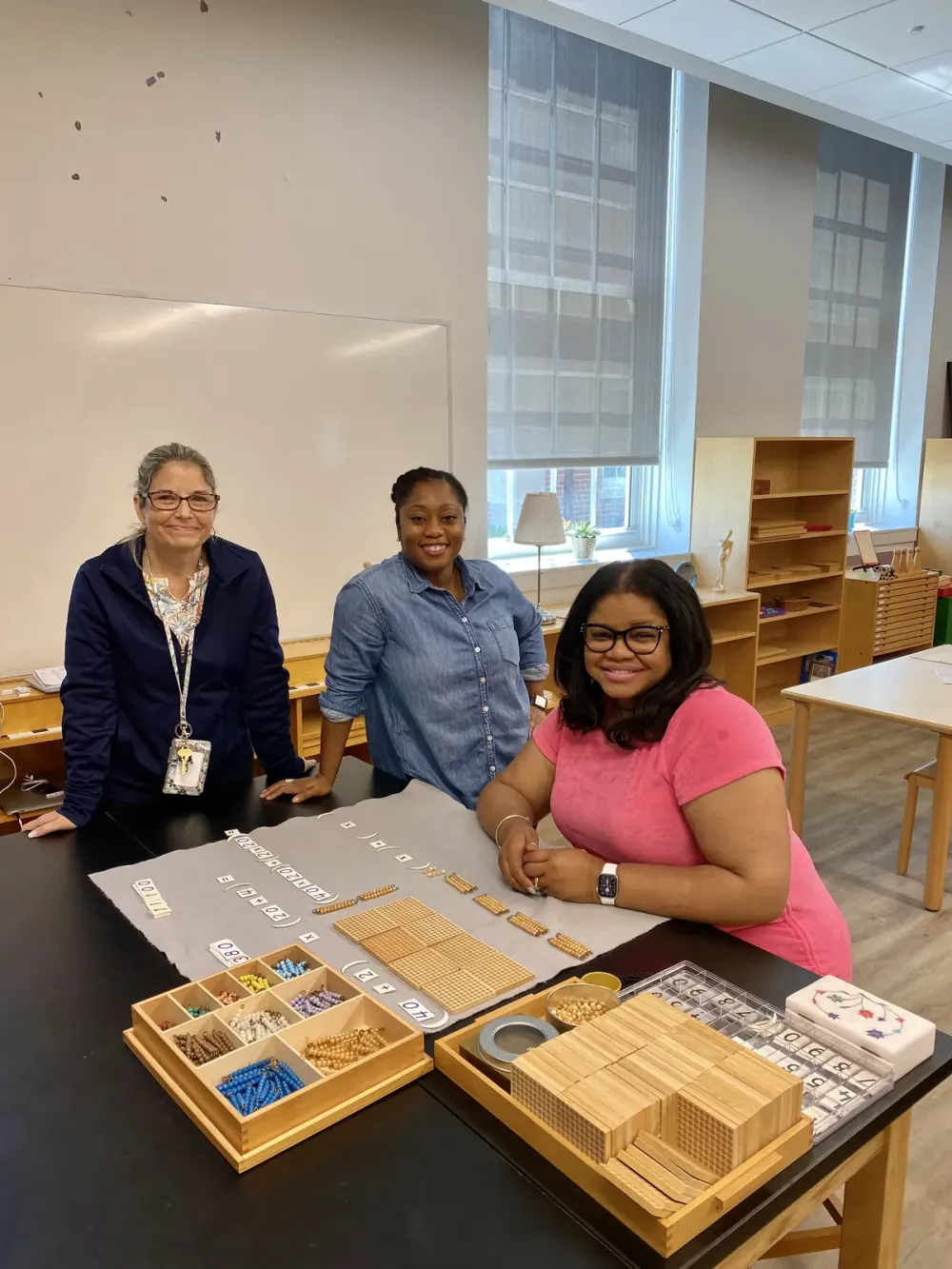
Regular practice in our model classroom. 90 hours of observation in a host classroom. 120 hours of practice teaching under a host teacher and the trainer. Students make timelines, charts, and other classroom materials.
See 6–12 diploma courses
Apply for an upcoming course, or contact our team to find the right fit.