
“This 0–3 training has transformed how I see and do things. I have slowed down, become more aware of my thoughts, reduced assumptions and judgements about the child in front of me, and now give greater consideration to the environment. I feel like I am a better human being as I work with children.”
Assistants to Infancy
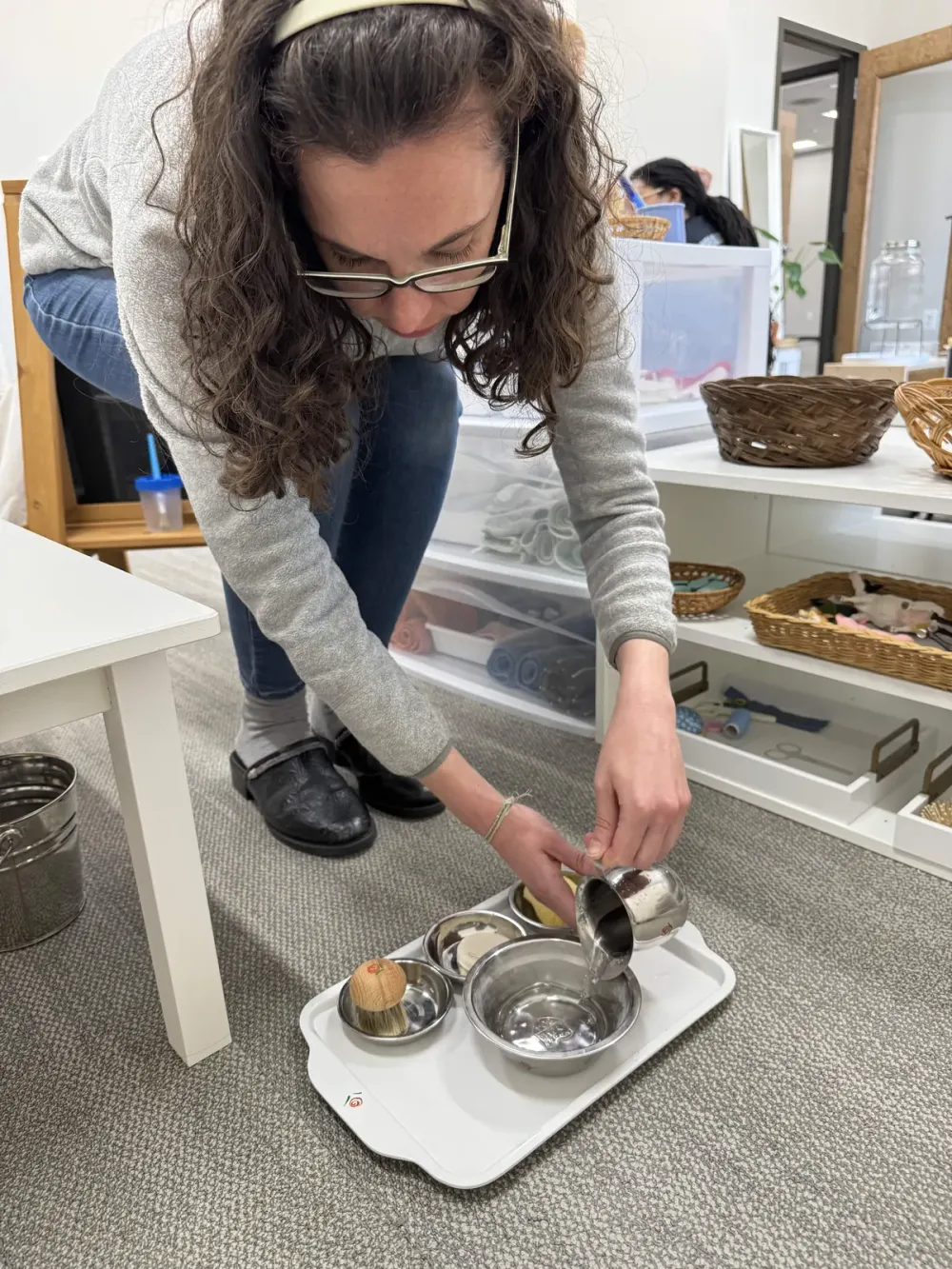
Dr. Montessori created a developmental approach that honors the way the young child naturally learns — through sensorial exploration of the surrounding world. The Assistants to Infancy diploma covers Montessori pedagogy and current medical and psychological approaches to child development from birth to three. Students engage in classroom-based training (in-person and online) including lectures and supervised practice, as well as extensive practice in observation.
Observation: 250 hours. Practice teaching: 30 hours.
Learning aims
- Acquire comprehensive knowledge of Montessori instructional methods and materials appropriate to specific age groups.
- Articulate the relationship of learning at a specific age group to the broader continuum of human development.
- Apply knowledge of the liberal arts to the design of integrated, interdisciplinary curricula.
- Develop the academic, professional, and personal skills to independently direct a Montessori classroom.
- Practice facilitation skills to elicit independent activity and exploration.
- Demonstrate consideration and respect for each child as an intellectual, physical, emotional, social, and spiritual being.
- Develop community-building skills based upon a fundamental respect for children and adults.
- Advocate for the rights of all children.
Components of the course
Theoretical foundations
Lectures and discussions on Montessori philosophy and child development. Students write theory essays, supplemented by directed readings of Dr. Montessori’s books.
Medical / developmental
Anatomy and physiology, obstetrics, nutrition, hygiene and child health and safety, and child neuropsychiatry.
Methodology
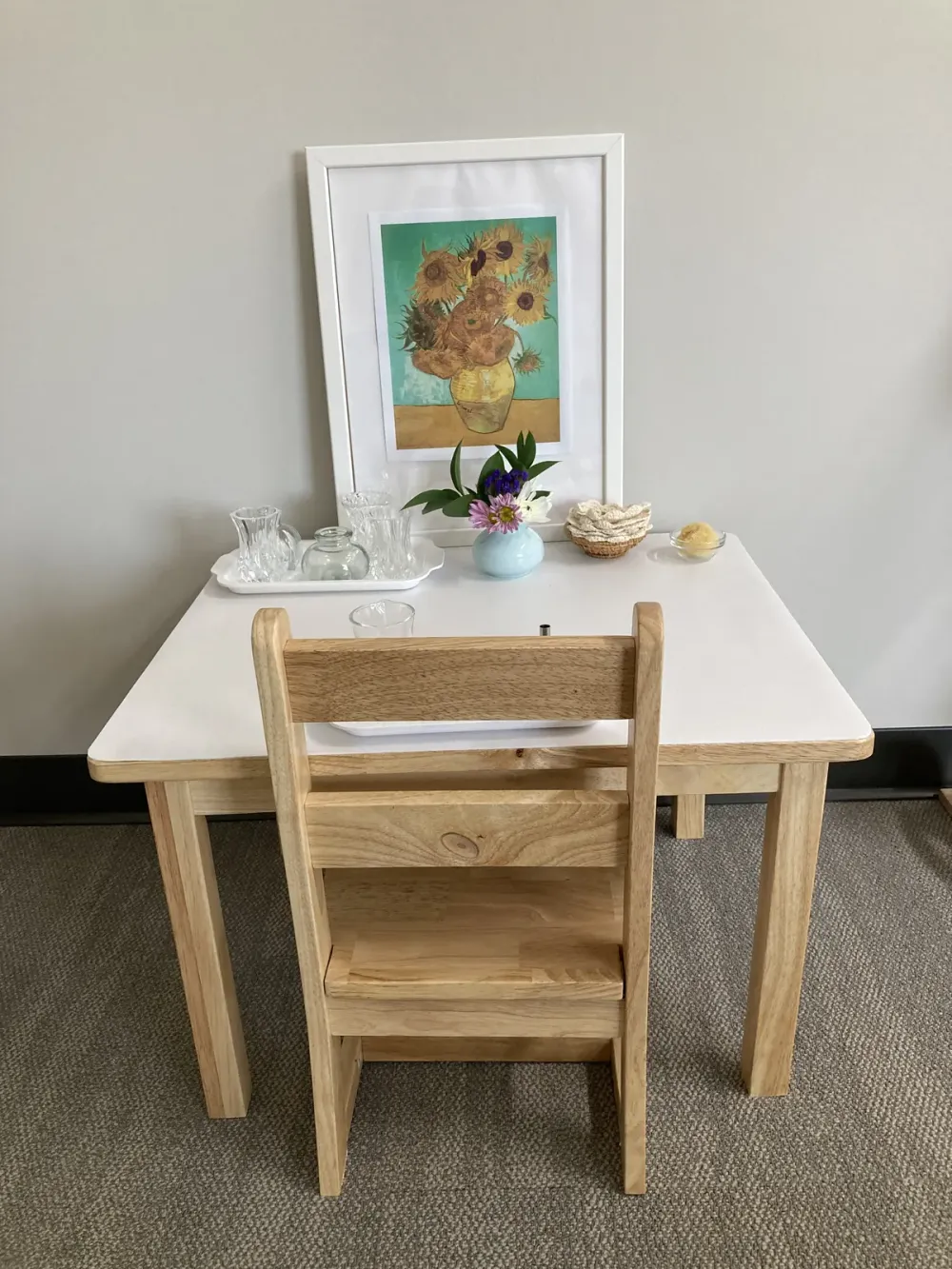
Psycho-sensory development, creating a home environment, starting communities for infants and toddlers, and activities for language, movement, music, art, and practical life.
Hands-on practice, observation, material making
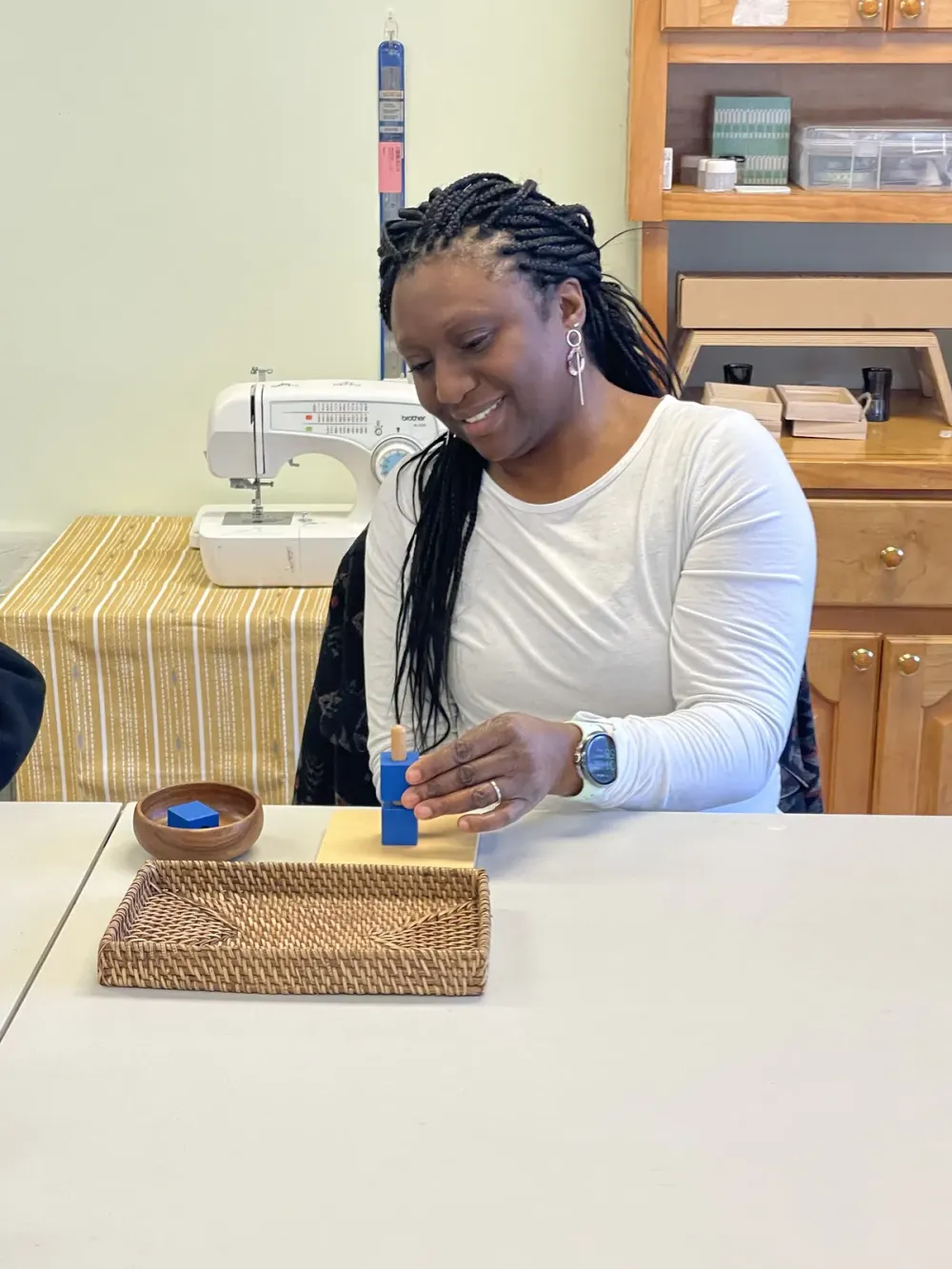
Regular practice with materials in our model environment. 250 hours of observation of children of different ages, and work experience in 0–3 prepared environments. Each student crafts illustrated reference albums and a theory album.
See upcoming 0–3 courses
Apply for an upcoming course, or contact our team to find the right fit.